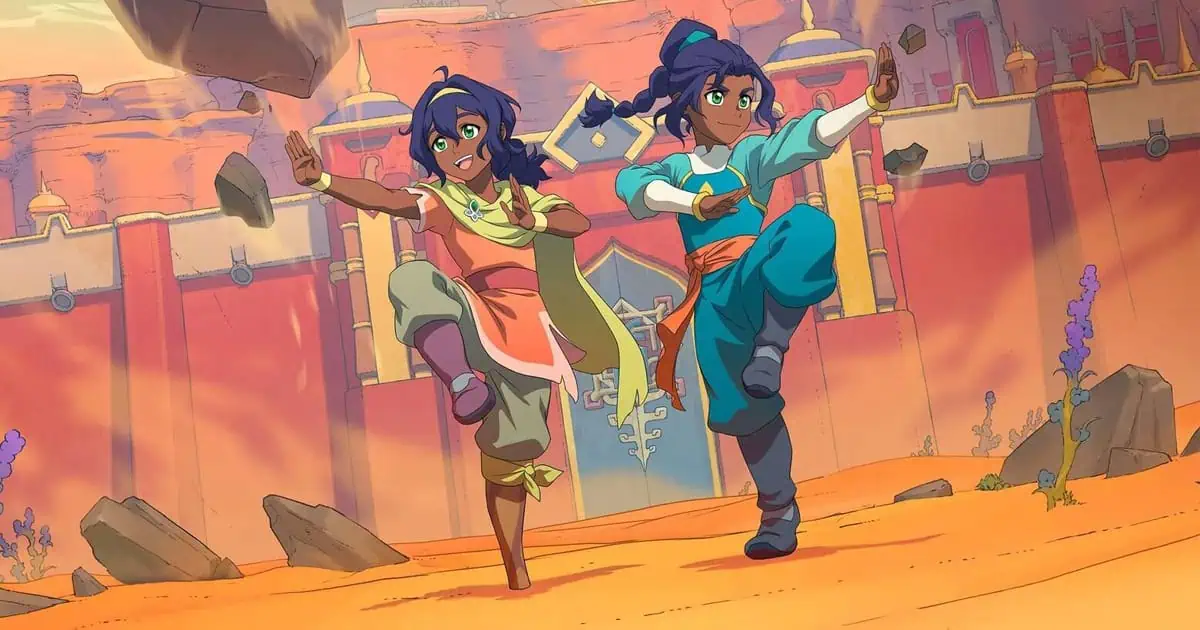
There is something genuinely wild about a studio greenlighting four seasons of an animated show before audiences have even finished digesting the premiere. But when you are dealing with a cultural monolith like the Avatar universe, the rules of traditional television simply do not apply.
Betting the Farm Before the First Arrow Flies
Personally, I think the massive double-season renewal for Avatar: Seven Havens—securing its path all the way through seasons 3 and 4 right out of the gate at New York Comic-Con—tells us everything we need to know about where modern streaming strategy is heading. Paramount+ is not just throwing darts at a board; they are planting a flag. What many people don't realize is that legacy franchises operate on a level of insulation that standard original IPs can only dream of. In my opinion, this kind of pre-emptive confidence is a double-edged sword. On one hand, it frees creators Michael Dante DiMartino and Bryan Konietzko to map out a long-term narrative arc without constantly looking over their shoulders for ratings panic. On the other hand, it heaps an astronomical amount of pressure onto the creative team. If you are told your world is safe for four seasons before day one, the expectation for world-building depth skyrockets. What makes this particularly fascinating is how radically different this era feels compared to the anxious, episodic rollouts of The Last Airbender or The Legend of Korra two decades ago.
Turning the Mythos Upside Down
If you take a step back and think about it, the premise of Seven Havens is a brilliant subversion of everything the Avatar brand stands for. Shifting the spotlight to Pavi, an Earthbender whose very identity as the Avatar marks her out as a harbinger of doom rather than a sacred savior, completely changes the psychological landscape of the mythos. From my perspective, fatigue is the silent killer of long-running franchises. Fans say they want more of the same, but the moment they get it, they complain that it feels stale. By painting the Avatar as a hunted fugitive of civilization's last remaining bastions, the creators are leaning into a darker, more desperate flavor of storytelling. A detail that I find especially interesting is how this reframes the role of the spirit world and human factions alike. Instead of an external villain threatening the peace, the threat is woven into the very social fabric of the remaining havens. What this really suggests is a narrative maturity that mirrors the aging demographic of the original fanbase—we grew up, and now the storytelling is growing up right alongside us.
Representation, Comedy, and the Modern Animated Landscape
One thing that immediately stands out about the early reactions to the show is the deliberate blending of high-stakes survival with classic franchise levity and progressive relationship arcs. What some older purists might overlook is that the original series always thrived on balancing existential dread with absolute goofiness. You cannot have an effective epic without moments of breathing room, and it sounds like Seven Havens understands this delicate ecosystem well. If you look at the broader cultural conversation around modern animation, audiences are fiercely demanding authentic representation and emotional resonance. When a massive fantasy universe organically integrates diverse relationships and progressive character dynamics while maintaining its signature comedic timing, it stops feeling like a checklist and starts feeling like a living world. This raises a deeper question about how far media has evolved: we are finally moving past the era where inclusion felt like an after-thought, integrating it seamlessly into the very DNA of epic adventure. Ultimately, stepping back into this world after a twelve-year break feels less like a nostalgic cash-grab and more like a necessary homecoming for a generation that still looks at elements as a framework for how to see the world.