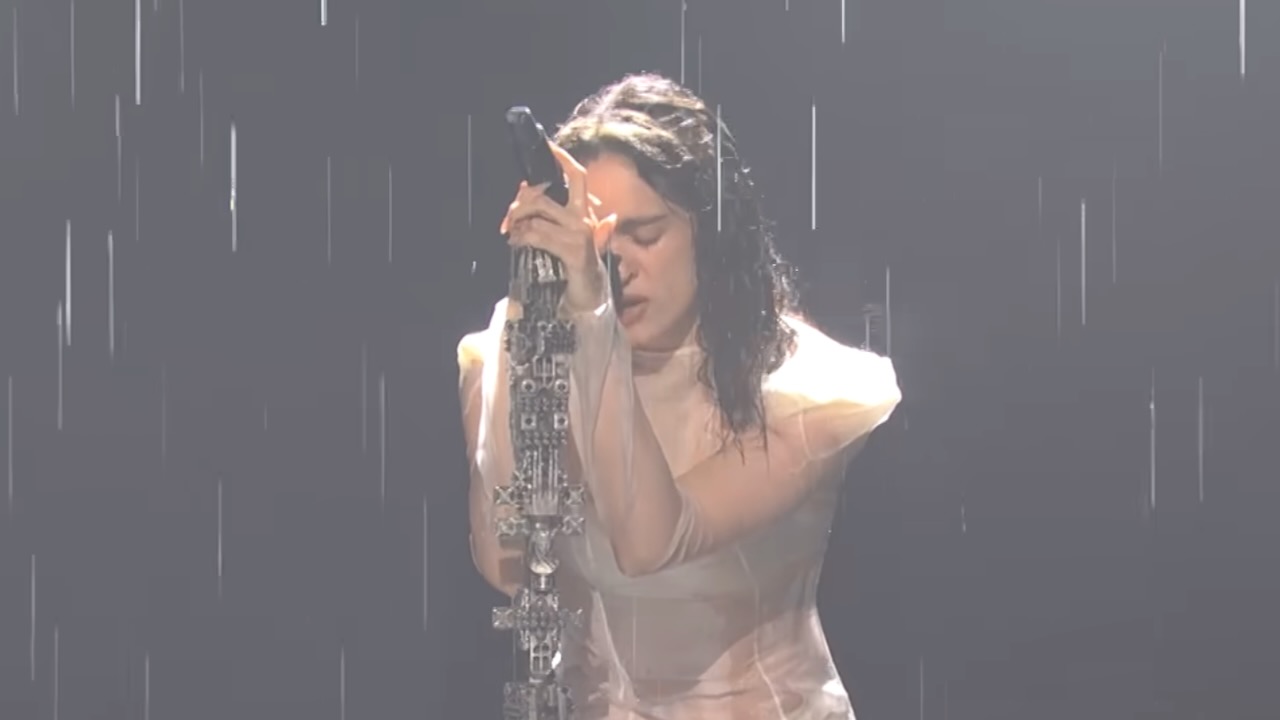
There are artists who release albums, and then there are artists who construct entire cultural ecosystems. Personally, I think what Rosalía has managed to pull off with her LUX era places her in a completely different tier of modern pop auteurism. When you look at how music is usually consumed today—fragmented into algorithm-friendly TikTok loops and disposable singles—her approach feels almost radically anachronistic. She is building monumental, high-concept worlds in an age of micro-attention spans, and frankly, it is exhilarating to watch.
The Audacity of Scale in a Minimalist Era
What makes this particular chapter in her career so fascinating is the sheer, unapologetic grandiosity of it all. Recorded alongside a full orchestra and weaving lyrics across a staggering sixteen different languages, LUX wasn't just a collection of songs; it was an exercise in borderless artistic ambition. In my opinion, most contemporary artists are terrified of sounding pretentious, so they lean heavily into effortless, low-stakes cool. Rosalía completely rejects that safety net. She embraces high drama, classical grandeur, and absolute emotional exposure. From my perspective, this is why her work resonates so deeply: she treats pop music not as background noise for a Saturday night, but as high art worthy of intense intellectual and emotional investment.
Conquering the Beast That Is Studio 8H
One thing that immediately stands out when evaluating a pop star's true caliber is how they handle the notorious acoustic trap of Saturday Night Live's Studio 8H. It's a notoriously unforgiving room that has swallowed many a legendary vocalist alive. Yet, watching Rosalía translate the cinematic architecture of the LUX tour into that confined space was a masterclass in performance discipline. For "Reliquia," executing an entire vocal performance en pointe—balancing classical ballet rigor with pitch-perfect live singing—is the kind of high-wire act most performers wouldn't dare attempt. Then, pivoting to "Magnolias" against a stark, rain-drenched backdrop, she stripped away the noise and relied entirely on raw, visceral atmosphere. What many people don't realize is how much physical and mental stamina goes into maintaining that level of control under intense broadcast pressure. It wasn't just singing a song; it was a demonstration of absolute artistic sovereignty.
The Quiet After the Storm and What Comes Next
If you take a step back and think about where she stands right now, having wrapped up a massive five-act live tour with barely any public appearances left on her calendar, it feels like a calculated pause before an inevitable coronation. With Grammy nominations looming on the horizon and whispers of collaborations with legacy acts like U2 on the horizon, this isn't the end of a cycle—it's the breathing room before the next evolution. What this really suggests is that Rosalía is playing a multi-decade game. She isn't chasing the fleeting momentum of a single viral moment; she is quietly cementing a legacy as one of the defining creative forces of our generation. And honestly? We are lucky to be watching it unfold in real time.